Most coverage treats "SIM versus eSIM" as a settled rout, with eSIM the obvious winner. Spend a week traveling and the picture gets more interesting. eSIM does win the majority of 2026 use cases, and it wins them comfortably. But the plastic card you've carried for two decades still has a few jobs it does better, and knowing which job is in front of you is the whole point.
This guide takes both technologies on their own terms. It explains how each one works, maps the cases where each pulls ahead, and ends with a way to decide that fits whether you're buying a new phone, moving carriers, or booking a trip.
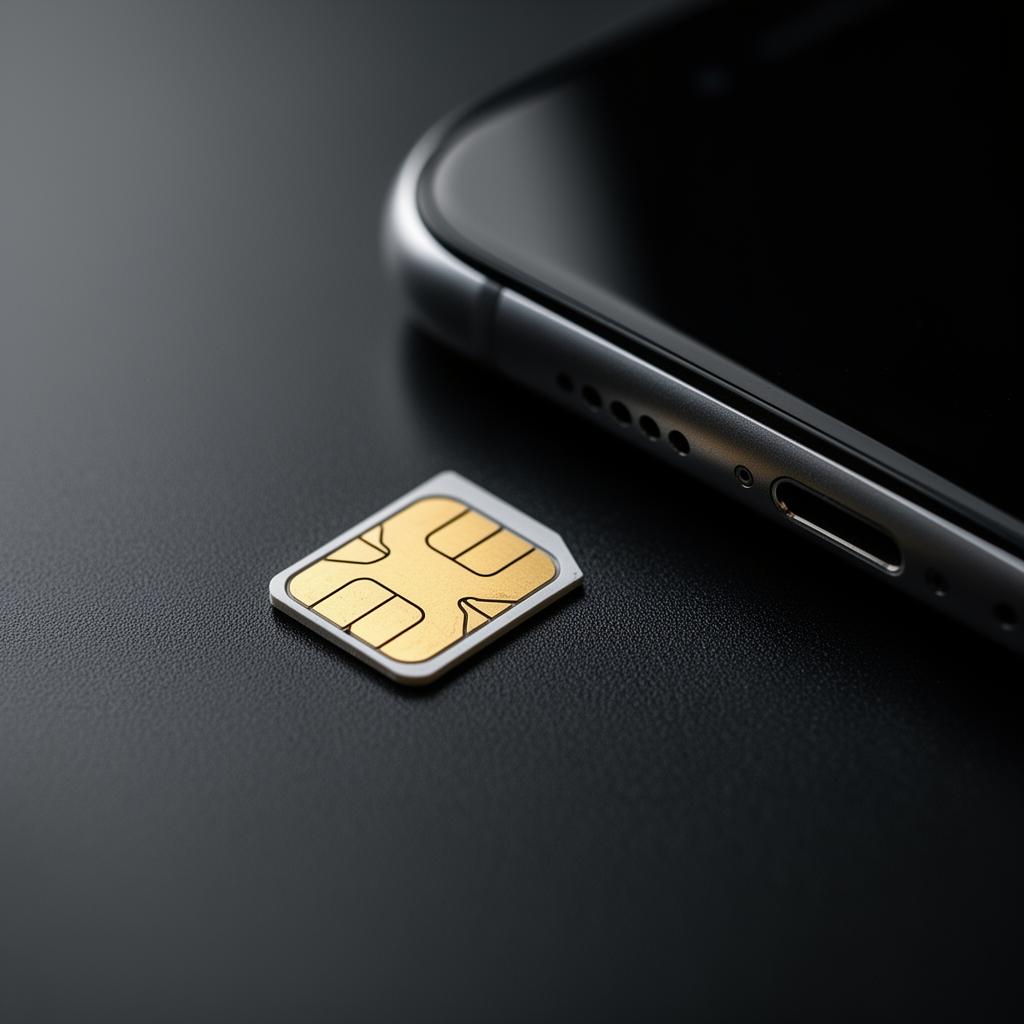
How a SIM and an eSIM differ under the hood
Both do the same job at the network layer: they identify your device to a mobile carrier so you can use cellular data, voice, and SMS. The difference is in how you obtain and manage them.
A physical SIM card is a small removable plastic card containing a chip with your subscriber identity data. You buy it (or it ships to you), you insert it into a tray on the side of your phone, and the phone reads its contents. To switch carriers, you swap the card for another one.
An eSIM (embedded SIM) is a chip soldered onto your phone's circuit board during manufacturing. It does the same job as the SIM-card chip, but instead of riding on a removable card, it lives permanently inside the device. To switch carriers, you download a new digital "carrier profile", usually by scanning a QR code from your provider, per the GSMA eSIM consumer specification.
Both are standardized, widely supported, and equally capable of carrying calls, SMS, and high-speed 4G/5G data. Neither one carries a speed or coverage penalty.
Where a physical SIM still holds up in 2026
The industry has thrown its weight behind eSIM, but a few groups of users come out ahead with the plastic card.
Older or budget devices
eSIM needs hardware support, meaning an embedded chip on the motherboard. Phones built before about 2018 often don't have one, and even in 2026 a meaningful share of new budget-tier Android devices ship without eSIM to shave manufacturing cost. If your phone falls in either group, the question of "SIM or eSIM" answers itself.
Prepaid markets that haven't caught up
In several countries the major prepaid carriers have not rolled out eSIM provisioning at all. India's prepaid market is one of the longest-running examples, and certain African and Latin American operators are in the same position. A physical SIM is the only way to get a local plan from the local prepaid carrier in these places. eSIM travel plans from international providers like Lotsotravel still work, but a Jio or MTN-equivalent prepaid plan isn't available as an eSIM yet.
When the phone breaks abroad
This is the scenario eSIM marketing tends to skip past: your phone dies at the worst possible moment in a foreign country. With a physical SIM you can pull the card, drop it into a friend's spare phone or a pawn-shop replacement, and have your number working again in under a minute. With an eSIM, you'll contact your carrier to issue a fresh profile onto a different device, a process that runs anywhere from a few minutes through the app to a day of customer-service emails depending on the carrier.
For most travelers this is rare enough that the convenience of eSIM still wins on balance. For people who spend a lot of time in remote areas, where reaching a known-good phone matters more than couch-bound convenience, it's worth weighing.
A few narrower edges the plastic card keeps
- Universal compatibility. Almost every phone built before 2023 has a physical SIM slot, so older or imported devices fit.
- No internet needed to activate. Inserting a physical SIM works with no Wi-Fi or cellular at hand, which matters in off-grid setups.
- Simpler carrier-side flow in some regions. A handful of smaller carriers still treat eSIM activation as a separate flow with manual approval steps, while their physical-SIM activation runs fully automated.
Where eSIM clearly wins
For the majority of modern users, the advantages of eSIM are substantial and stack quickly:
Instant activation
Buy a plan online, scan a QR code, you're connected in under five minutes. No waiting for shipping, no in-store visit, no SIM ejection tool, no risk of losing the punched-out plastic in the carpet.
Multiple profiles on one device
Most modern phones can store 8 or more eSIM profiles simultaneously and switch between them in a single tap. Practically, this means you can keep your home plan, a work plan, and several travel-region plans all installed and dormant, activating only the one you need at the moment.
Better travel economics
This is the dominant use case. Carrier roaming on Canadian or US plans typically runs $12-18 per day. A travel eSIM for the same destination is often less than the cost of a single day of roaming, for the entire trip. Coverage is often faster too, eSIM travel plans connect to local carriers as a regular subscriber rather than as a deprioritized roaming guest.
Physical security
A plastic SIM can be removed from a stolen phone and inserted into another device, where the thief can receive your SMS-based 2FA codes and potentially access your accounts. An eSIM cannot be physically removed, it's soldered to the motherboard and protected by your device lock. For users with significant SMS-based account recovery exposure (banking, crypto, work accounts), this is non-trivial.
Dual SIM, properly
Modern phones support running a physical SIM and an eSIM (or two eSIMs) simultaneously, both fully active. You can keep your home number on one line for calls and SMS while the other line carries cheap local data. This is the configuration that makes eSIM the dominant option for international travel, per Apple's dual-SIM documentation and equivalent material from Samsung and Google.
Less waste
Every physical SIM card requires plastic, packaging, and shipping. eSIM removes the entire chain.
Side-by-side: at a glance
| Physical SIM | eSIM | |
|---|---|---|
| Activation speed | Hours to days (in store or shipped) | Under 5 minutes (QR scan) |
| Multiple profiles on one device | One per slot | 8+ stored, switchable in seconds |
| Risk of physical loss/damage | Real (small, fragile, removable) | None (soldered in) |
| Theft recovery (SMS 2FA risk) | High (SIM can be moved to another phone) | Low (locked to the device) |
| Buy from home for international travel | Difficult (usually requires shipping or destination purchase) | Easy (website-based QR delivery (email notification when ready)) |
| Hand-to-friend emergency phone | Easy (swap the card in 30 seconds) | Hard (requires carrier reissue) |
| Compatibility with older/budget devices | Universal | Requires eSIM hardware (mostly 2020+) |
| Local prepaid plans in unsupported markets | Available everywhere | Limited in some regions |
| Environmental footprint | Plastic + packaging per purchase | Zero physical waste |
ProsCons summary
Pros
- Instant activation, buy online, scan a QR, online in 5 minutes
- Store multiple profiles and switch in a tap
- Cannot be physically stolen or moved to another phone
- Buy and install before international travel from your couch
- Travel eSIMs typically 5-20× cheaper than carrier roaming
- No plastic waste
Cons
- Requires eSIM-capable hardware (most 2020+ flagships, some budget Androids excluded)
- Cannot be quickly moved to a friend's phone if your device breaks
- Some smaller prepaid carriers still don't issue eSIM profiles
- Initial install requires an internet connection (Wi-Fi is fine)
- Carrier-locked devices may refuse third-party eSIM profiles
How to pick for your situation
A short decision framework. Pick the row that matches you:
- You travel internationally more than twice a year. Use eSIM for the travel data, keep your home line on whatever it currently is. The savings against roaming pay for the (small) effort of setup many times over.
- You're upgrading to a phone bought in the US in 2024+. It's eSIM-only. The decision is made for you. Move your existing line to eSIM through your carrier's self-service flow.
- You travel rarely and never leave your home country. Either works. Stick with whatever your current setup is unless something else changes.
- You have a budget Android phone or a phone older than 2018. Physical SIM. Your hardware likely doesn't support eSIM, and there's no reason to spend money to "upgrade" to eSIM for its own sake.
- You live in or frequently travel to a market where major prepaid carriers don't issue eSIM yet. Keep a physical SIM as your primary line and add a travel eSIM as a secondary line for international trips.
- You handle significant SMS-based 2FA for banking, crypto, or work. eSIM is meaningfully more secure against SIM-swap attacks because the chip can't be physically removed.
- You're a frequent traveler who often visits remote areas. Consider keeping at least one device with a physical SIM as a backup. The "swap to a friend's spare phone" workflow is only available with physical SIM.
What this guide doesn't cover
- Carrier-specific quirks. Some smaller carriers handle eSIM provisioning differently from the major flows. We've stuck to standard cases.
- Enterprise and MDM-managed devices. Corporate device management can override the consumer behavior described here.
- eSIM on smartwatches and laptops. Different conversation. Apple Watch and Galaxy Watch eSIMs are issued only by your home carrier, not by third-party providers. Surface and ThinkPad LTE laptops follow the consumer eSIM standard.
- Cruise-ship cellular. Neither physical SIM nor eSIM work on at-sea satellite cellular networks. Both work fine in port.
Which one to pick
For most users in 2026, eSIM is the better default, especially if you travel internationally even occasionally. The physical SIM is not obsolete and won't be for years, but its remaining advantages narrow to a specific set of cases: older or budget devices, a small list of prepaid markets, and the unlikely-but-real "phone breaks abroad" scenario where being able to swap a card into a friend's spare device matters more than convenience.
If your phone supports both (which most modern phones do), the strongest setup is a hybrid: home line on whichever technology your carrier currently issues, and a travel eSIM added on top whenever you fly internationally. You get the home-number stability of the SIM you already have, plus the cost savings and instant setup of an eSIM for the trip.
Try a Lotsotravel eSIM on your next trip
No commitment. Buy a single-trip plan, install at home, and activate when you land. Plans for 195+ countries from $4.99 USD.
Browse Lotsotravel eSIM PlansFrequently asked questions
Is eSIM strictly better than a physical SIM?+
Can I use both a physical SIM and an eSIM at the same time?+
If my phone is stolen, is an eSIM safer than a physical SIM?+
What happens if my phone breaks while I'm using an eSIM?+
Are eSIMs more expensive than physical SIMs?+
Will physical SIM cards eventually go away?+
Can I switch from a physical SIM to an eSIM with my current carrier?+
Methodology
How we did this comparison
Pricing claims in this article were cross-checked against the carriers' official rate pages on the date shown above. Lotsotravel pricing is pulled from our live destinations API at publish time and refreshed on every update. We exclude promotional pricing and bundle discounts that are not available to all customers. Currency conversions use the Bank of Canada noon rate from the verification date.
Sources & references
We verify carrier and regulator pricing directly from primary sources before publishing. Pricing is current as of the article's last update — always confirm rates on the carrier's site before you travel.
About the author
Lotsotravel Team
The Lotsotravel editorial team writes hands-on guides for international travelers. We test eSIMs on real devices in real destinations, monitor Canadian and U.S. carrier pricing weekly, and compare coverage across local network partners before we recommend a plan. Every comparison post is updated when carriers change their rates so the numbers you read here match what you would pay today.
Last updated: June 2, 2026